
Historic Images of England: Places, Landscapes and Social Change (19th–21st Century)
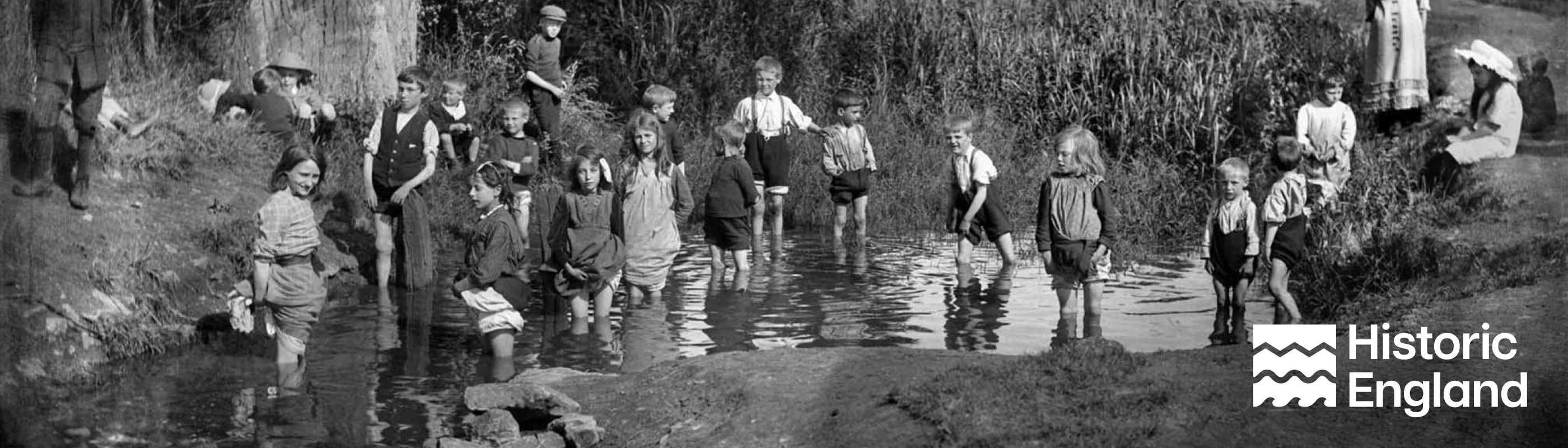
About this product
This sample introduces the Historic England Archive and brings together a curated dataset of images documenting how places across England have changed over time. The Archive’s collections record archaeological, architectural and cultural heritage, capturing both everyday places and sites of national importance.
Widely used across research, conservation and education, the Archive also supports emerging data‑driven applications where strong provenance, well‑described metadata and clear rights information are essential.
Content and themes
Material covers urban and rural locations, buildings, infrastructure, industrial sites, coastal and inland landscapes, and everyday environments, with date coverage extending from the 1800s through to the present day.
Collections consist primarily of photographs dating from the 1850s onwards including work by renowned and pioneering photographers, commercial studios, and decades of survey photography - recording places from tiny cottages and workers’ houses to power stations and tower blocks.
Alongside historic material, the Archive includes high-quality contemporary photography produced by Historic England’s own in‑house teams. Other notable content includes images of plans, maps, measured drawings, engravings, illustrations, and reconstruction artworks.
Format and delivery
Supplied as high resolution JPEGs and accompanied by a CSV containing structured metadata such as titles, descriptions, locations, subject tags, and rights statements.
Scale and significance
Accredited by The National Archives, the Archive continues to grow, with over 15 million items in storage and more than 1.7 million records digitised. It plays a vital role in supporting research, conservation, and public understanding of how places have changed over time.
Suggested uses
- Digital education and learning
- Academic and applied research
- Built environment, place‑based and historical applications
- Social change over time
- Industrial heritage and working lives
- AI development and fine‑tuning using ethically sourced visual data
- Creative industries (film, TV, games and publishing) - reference for historically grounded environments
Enquiries and access
Submit an enquiry to discuss how the Archive’s collections could support your specific use case.
Examples
The following highlights offer a representative view illustrating the range, quality and types of material held.
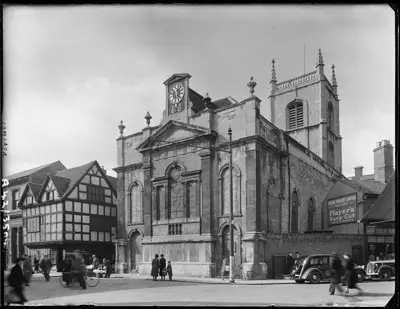
- Title: St Swithun's Church viewed from the north east at the junction of St Swithin's Street and Trinity Street
- Location: St Swithun's Church, Church Street, Worcester, Worcestershire
- Date: April 1942
- Photographer: George Bernard Mason. National Buildings Record
- Collection: George Bernard Mason Collection
- Rights: Historic England Archive
- UID: AA42/03504
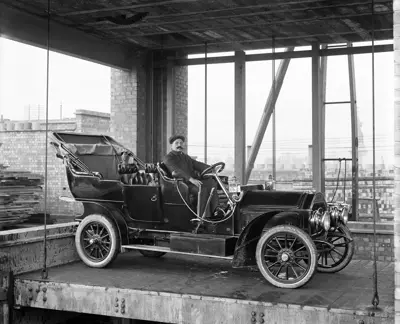
- Title: An early motor car on a car lift at the Mitchell Motor Works and Garage at 114 Old Wardour Street, with a chauffeur sitting in the driver's seat
- Description: A chaffeur sits in an early Rolls Royce car in the car lift at the Mitchell Motor Company in Wardour Street. Lifts are still used in preference to ramps where space is at a premium. Mitchell Motor Works and Garage was built in 1906 and offered 5 storeys of space for customers to 'garage' their vehicles, which were moved by a system of lifts and turntables, above their motor works. The garage facility was aimed at Soho's theatregoers, as commuting any great distance by car was still relatively unknown. The Mitchell Motor Garage commissioned this photograph.
- Location: Mitchell Motors Company, 114 Wardour Street, City Of Westminster, Greater London Authority
- Date: 6 August 1907
- Photographer: Adolphe Augustus Boucher. Bedford Lemere and Company
- Collection: The Bedford Lemere Collection. A series of over 24000 images dating from the early 1870s to the 1960s, the vast majority dating from the late 19th and early 20th centuries. The subject matter is broad in scope, but with an emphasis on residential, commercial and industrial buildings. In many cases, Bedford Lemere & Co. were commissioned by architects/builders/owners to photograph newly constructed or refurbished buildings, often providing a full record of a site. There are many views of country house interiors and exteriors, the interiors of passenger liners (including HMS Ophir and the Mauretania), The Royal Train, people at work in offices and factories (notably armament factories during the First World War) and some ecclesiastical buildings. Coverage is national, but with an emphasis on London. (HBL01/01)
- Tags: Edwardian Garage, Road Transport
- Rights: Source: Historic England Archive
- UID: BL19998
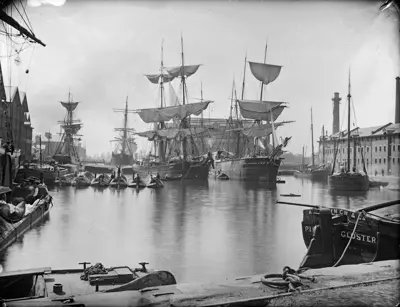
- Title: A general view showing sailing ships at Gloucester Docks
- Location: Gloucester Docks, Gloucester, Gloucestershire
- Date: 1880 - 1900
- Photographer: Sydney Pitcher
- Collection: Sydney Pitcher Collection. Gloucester based professional photographer who contributed over 5000 images, taken between 1910s-1940s, to the National Building Record. Coverage includes secular and ecclesiastical architecture - especially cathedral interiors and exteriors in Gloucestershire, Hereford and Worcester, Oxfordshire, Hampshire and Berkshire, with the emphasis on Gloucester and Cotswolds.
- Tags: Dock, Water Transport
- Rights: Source: Historic England Archive
- UID: CC53/00092
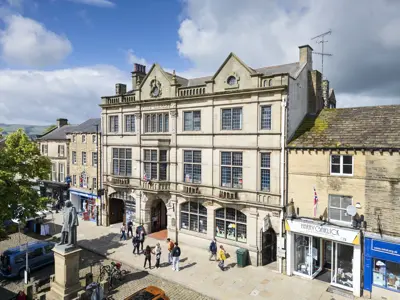
- Title: General view of Skipton Library from the north-east
- Description: Drone photography
- Location: Library, High Street, Skipton, North Yorkshire
- Date: 3 July 2024
- Photographer: Alun Bull. Historic England
- Collection: High Streets Heritage Action Zone: Skipton. Historic England
- Tags: Street Scene, Urban Landscape
- Rights: Historic England Archive
- UID: DP486164
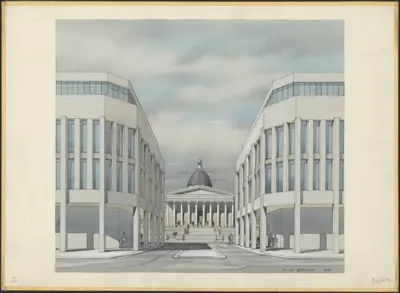
- Title: Perspective View
- Location: University College London, Gower Street, Bloomsbury, Camden, Greater London Authority
- Date: 3 July 2024
- Collection: LCC/GLC Historic Buildings Survey Drawings; within the Greater London Council and London County Council Collection
- Type: Measured Drawing
- Rights: Historic England Archive
- UID: MD96/06190
Collection examples:
- Henry W Taunt
- 13k images
- A photographic collection by Henry William Taunt capturing Oxford, the Thames and nearby counties, from tourist views to street scenes, industry and local people. It provides a strong visual record of architecture and society around the turn of the 20th century.
- CG Harper (CGH01)
- 1k images
- A collection of drawings and paintings by travel writer and artist C. G. Harper, documenting buildings, streets and landscapes across England from the late 19th and early 20th centuries. The works record both prominent historic sites and lesser‑known architectural features observed during Harper’s journeys.
- LMS Railway
- 1.6k images
- A wide‑ranging late‑19th and early‑20th century photographic collection documenting sites across England, from cathedrals and castles to railway goods depots and seaside towns. Created within a railway company context, the photographs were used for publicity and promotional activity.
- JJ Samuels (Sam01)
- 1k images
- A photographic record of central London from the early 20th century to the post‑war period, featuring major landmarks, street life and public events. The collection captures significant historical moments such as royal jubilees, victory parades, the General Strike of 1926 and V‑E Day in 1945.
- Eric de Mare
- 2.6k images
- Architectural photography collection capturing buildings and landscapes across England, with a strong emphasis on London’s riverside, industrial heritage and post‑war housing. The images record both historic structures and major mid‑20th‑century urban change.
About Historic England
From the extraordinary, to the everyday, our historic places and spaces matter – to you, to us, to the nation.
From community centres to cathedrals, homes to high streets, markets to mills – they are the places we all choose to hold onto, the legacy we want to pass on and the stories we continue to tell.
That’s why at Historic England we work together with people and organisations across England, to discover, protect and bring new life to our shared historic environment. Providing advice, knowledge, support and services, so the history that surrounds us all, lives on and is loved for longer.
Assets (2)
Historic England: Historic Images Sample Data
Files
16.35 KB
Sample Images from Historic England Archive
Files
32.57 MB